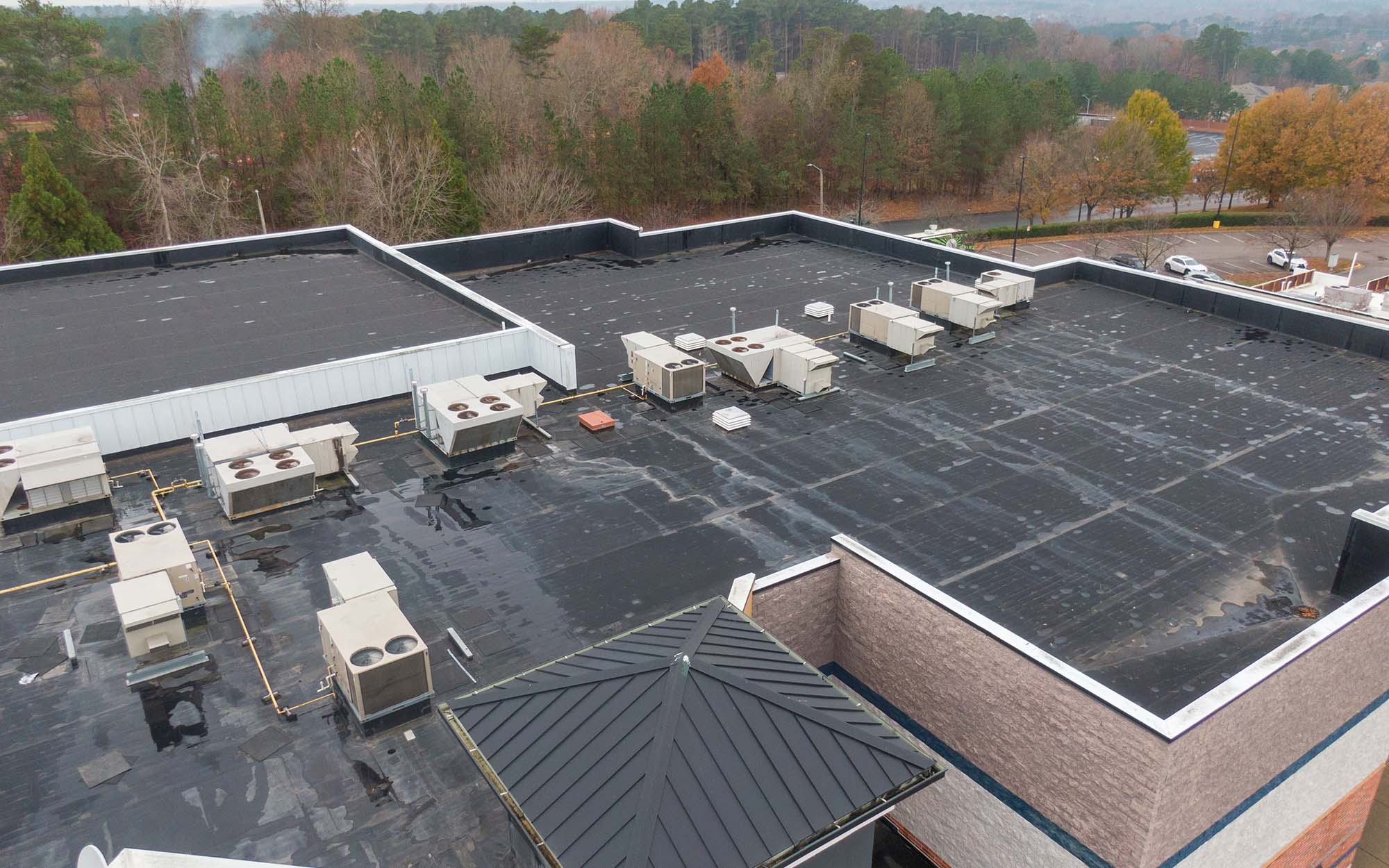
An open breach in a commercial roof doesn’t need active rain to cause damage. Flat and low-slope roofs pond water after every rainfall, often for a day or more before it drains. A seam failure or puncture near a low point can send that standing water straight into the building on a clear day. During an active storm, the same opening keeps letting water in for as long as the rain lasts. The Superior Group handles emergency commercial roof repair across Connecticut, the Northeast, Mid-Atlantic, and West Florida: stopping the water first, then scoping the permanent fix.
The Cost of Waiting on a Damaged Commercial Roof
Urgent roof repair situations rarely follow a predictable schedule. A membrane can split during a summer storm, ice damming can open a seam in February, or a rooftop unit can shift and puncture the deck on an otherwise dry afternoon. What happens next depends on the roof at that moment. Standing water already pooled on a flat or low-slope roof drains straight through a new opening, storm or no storm. An opening that appears during active weather just keeps taking on water for as long as the rain lasts. Left alone, either one saturates the insulation and decking underneath and turns a roof repair into a structural one.
Active Leaks That Threaten Equipment and Inventory
Emergency roof leak repair stops water before it reaches inventory, electrical systems, and equipment inside a warehouse, distribution center, or retail space. The Superior Group’s crews find the actual source with drone and infrared survey technology rather than guessing, so the repair targets the real point of failure instead of a downstream symptom.
Storm and Wind Damage Left Exposed to the Elements
High wind and hail can lift membrane seams, tear flashing, or strip sections of a flat or low-slope roof. A deck left exposed after a storm stays vulnerable at the next rain event, and on a flat roof, water already pooling nearby can reach the opening before that next storm even arrives.
Structural Punctures That Compromise the Deck
Falling debris, equipment failure, or age-related deterioration can puncture the roof deck itself, not just the membrane. A puncture left open compromises the building envelope and creates a direct path for water, pests, and further structural stress.
Temporary Protection and Permanent Repair in One Response
Emergency response from The Superior Group happens in two phases. First, stopping active damage: tarping, temporary membrane patches, or deck sealing to keep water out right away. Second, fixing the underlying failure with a permanent repair scoped to the specific roofing system, whether that’s modified bitumen, TPO, EPDM, or a metal assembly.
The longer a damaged roof sits open, the more likely the next rain event turns it into water damage.
From First Call to Roof Secured
An emergency call starts with a direct conversation about what’s happening: the type of damage, where it’s on the roof, and whether water is actively entering the building. That conversation determines what the crew arrives prepared for. Diagnosis continues on-site with the same drone and infrared survey equipment used on every Superior Group inspection, so the plan that follows is based on the actual extent of the damage, not a guess from the ground.
When a claim is involved, the team handles the insurance documentation directly, so paperwork doesn’t become a second project on top of the repair. Financing up to $100,000 covers repairs that fall outside a standard budget cycle, which means the work can start before a purchase order clears.
Protecting Operations While the Permanent Repair Gets Scheduled
A roof secured within hours, not days, keeps a facility operating instead of shutting down a section of the building or an entire location. Inventory, electrical systems, and interior finishes stay protected from continued water exposure. That’s often the difference between a roof repair invoice and a full interior restoration project. Handling the temporary and permanent work as one engagement also means fewer separate site visits, and less disruption to staff, tenants, or production schedules while the repair gets finished.
A Track Record Built on Thousands of Commercial Roofing Projects
The Superior Group has provided commercial roofing and emergency roofing services across Connecticut, the broader Northeast and Mid-Atlantic, and West Florida for 17 years.
[NEEDS INPUT: social proof required. A testimonial or named project reference specific to an emergency or storm-damage repair job.]
Emergency Response Backed by the Same Team as Every Scheduled Project
An emergency call goes to the same crew that handles every scheduled Superior Group project, not a subcontracted overflow team brought in only for storm surges. The technician who assesses the damage today can be the same one who finishes the permanent repair. A temporary fix also carries the same warranty terms as scheduled work.
Frequently Asked Questions About Emergency Commercial Roof Repair
How fast can The Superior Group respond to an emergency call?
The Superior Group takes 24-hour commercial roof repair calls, so urgent roof repair requests don’t have to wait for business hours. On-site response time depends on location within the Northeast, Mid-Atlantic, or West Florida service area and the nature of the damage. Calls involving active water intrusion are prioritized ahead of standard scheduling.
Will a temporary repair damage the roof or void a warranty?
A temporary fix used in emergency roof leak repair, such as tarping or a membrane patch, is designed to stop water intrusion without compromising the roofing system for the permanent repair that follows. Existing manufacturer or Superior Group warranty coverage is reviewed during the same visit
What’s the difference between an emergency repair and a scheduled repair?
An emergency repair addresses active damage, typically water intrusion or a structural breach, on an urgent timeline. A scheduled repair follows a standard inspection and quote process. Both use the same crews and materials standards; the difference is response priority, not repair quality.
Does The Superior Group handle insurance claims for storm or emergency damage?
Yes. The team documents the damage on-site and works directly with insurance carriers on claims tied to storm or emergency repair work, which removes a step from an already time-sensitive situation.
What types of commercial roofs qualify for emergency repair?
Flat and low-slope commercial roofing systems qualify, including TPO, EPDM, modified bitumen, and metal assemblies. The crew brings drone and infrared inspection equipment to confirm the extent of damage regardless of roofing material.
Can financing cover an unplanned emergency repair?
Financing up to $100,000 is available for repair work that falls outside a facility’s standard budget cycle, which means an emergency doesn’t have to wait on a purchase order or board approval before work begins.
Secure the Roof Before the Damage Spreads Further
A commercial roof failure left open gets more expensive to fix with every rain event it’s exposed to. The Superior Group provides emergency roofing services across Connecticut, the Northeast, Mid-Atlantic, and West Florida, with the same crew carrying the job from the first tarp to the finished repair. Call 888-563-3918 or submit a request below to get the assessment started. roof inspections for property owners and facility managers across the Northeast, mid-Atlantic, and West Florida.