If you’ve ever stared at a leaking ceiling tile and wondered when this problem actually started, you already know the answer to today’s question. It started long before the leak. It started the last time someone should have been up on that roof but wasn’t.
For facility managers and property owners, knowing how often to schedule a commercial roof inspection is one of the most important pieces of operational knowledge you can have. Get the timing right and your roof lasts longer, costs less to maintain, and rarely surprises you. Get it wrong and you’re playing defense against problems that were entirely preventable. This guide breaks down exactly how often inspections should happen, what affects that timing, and how to build a smart schedule that protects your building year-round.
Recommended Commercial Roof Inspection Frequency
Let’s start with the question you came here to answer. How often should a roof be inspected? The short answer is more often than most people think, and the long answer depends on a few key factors we’ll cover throughout this guide.
Standard Annual Inspections
At an absolute minimum, every commercial roof should receive an annual roof inspection. This is the baseline expected by most manufacturers, insurance carriers, and warranty providers. Skip it, and you risk voiding coverage that could save you tens of thousands of dollars later.
Semi-Annual Recommendations
The industry standard, and what most roofing professionals will tell you, is twice a year. One inspection in spring to assess winter damage, and one in fall to prepare for the cold months ahead. This semi-annual rhythm catches seasonal wear before it becomes structural.
Post-Storm Inspections
Any time your area experiences hail, high winds, heavy snow, or severe weather, schedule a commercial roof inspection within a week of the event. Storm damage often hides in places you can’t see from the ground, and waiting for the next scheduled visit gives that damage time to spread.
Factors That Affect Inspection Frequency
The right commercial roof inspection frequency for your building depends on several variables. A new TPO roof on a quiet office building has very different needs than a 20-year-old built-up roof on a busy warehouse.
Roof Age and Condition
Newer roofs in good condition can often get by on the standard twice-a-year schedule. Roofs in the last third of their expected lifespan benefit from quarterly checks, since failure points multiply as systems age.
Roofing Material Type
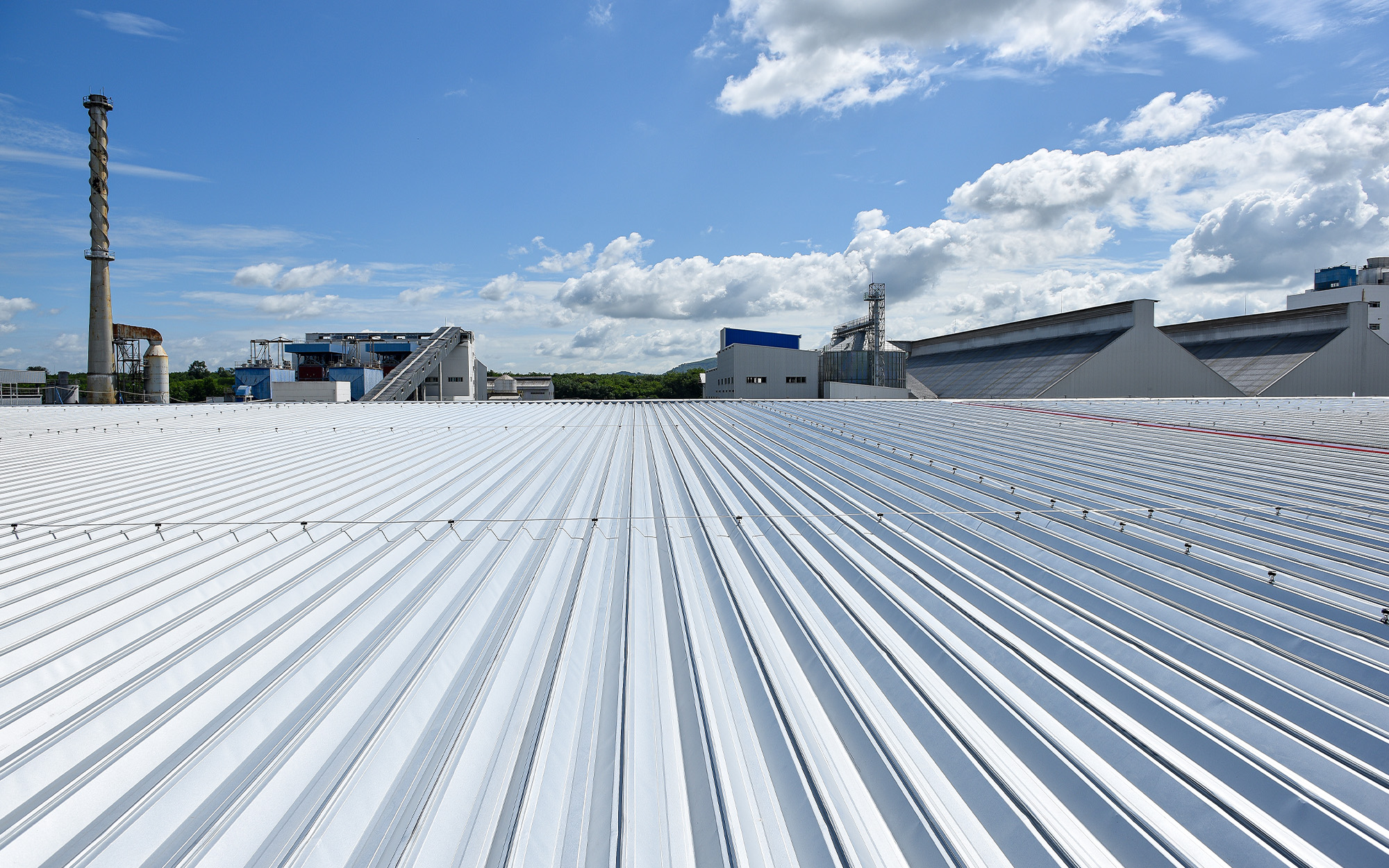
EPDM, TPO, PVC, modified bitumen, and metal each have their own vulnerabilities and inspection priorities. Membrane roofs need close attention to seams and punctures, while metal roofs need a closer look at fasteners and coatings.
Climate and Weather Exposure
Buildings in regions with extreme weather, whether that’s Florida humidity and hurricanes or New England snow and ice, need more frequent inspections than buildings in mild climates. The harder the weather works on your roof, the more often you need eyes on it.
Building Use and Rooftop Traffic
If your roof hosts HVAC technicians, telecom contractors, or maintenance crews on a regular basis, schedule extra inspections. Foot traffic is one of the leading causes of avoidable membrane damage on commercial roofs.
What Happens During a Commercial Roof Inspection
Knowing what an inspection actually involves helps you understand its value and evaluate whether you’re getting your money’s worth.
Exterior Evaluation
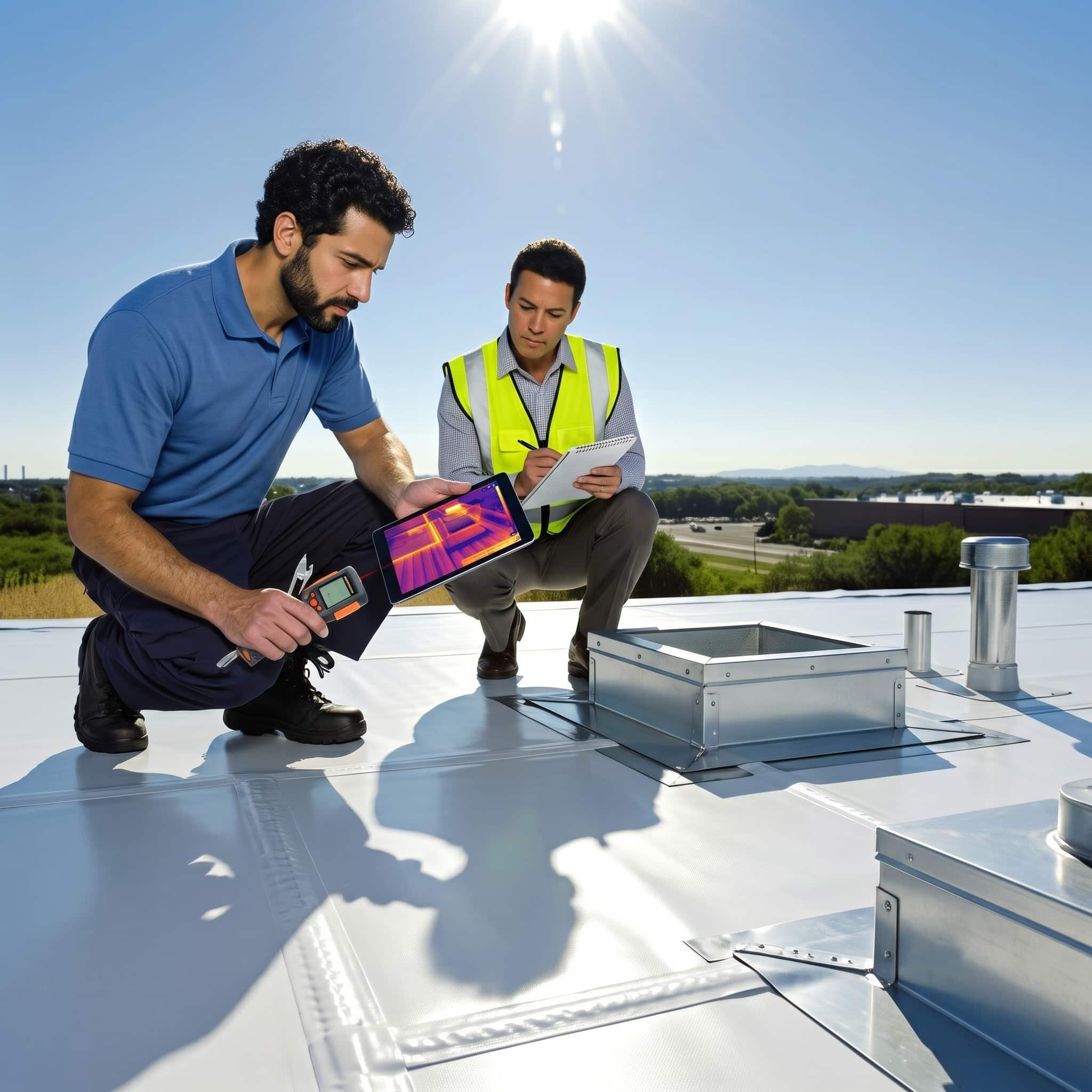
A thorough commercial roof inspection starts with a walk of the entire roof surface. Inspectors look at membranes, coatings, seams, edges, and parapets for visible signs of wear, damage, or aging. Drone surveys and infrared scans add a layer of precision by detecting issues invisible to the naked eye.
Interior Leak Detection
The inspector should also check the underside of the roof from inside the building. Stained ceiling tiles, damp insulation, and visible water trails tell a story about where water is getting in, even when the entry point isn’t obvious from above.
Drainage System Checks
Drains, scuppers, and gutters get cleared and tested. Clogged drainage is one of the most common causes of premature roof failure on commercial flat roofs, and a few minutes of cleaning can prevent thousands in damage.
Flashing and Penetration Inspection
Every vent, pipe, HVAC curb, and rooftop unit gets close attention. Flashing failures and penetration leaks account for a huge percentage of all commercial roof problems, and these are exactly the spots where small issues become big ones fastest.
The best time to schedule a commercial roof inspection is before you need one. The Superior Group offers free, no-pressure inspections using drone and infrared technology to give you a complete, documented picture of your roof’s true condition. Check out more.
Warning Signs That You Need an Immediate Inspection
Some signs can’t wait for your next scheduled visit. If you see any of the following, get a commercial roof inspection on the calendar immediately.
Interior Water Stains
Brown rings on ceiling tiles, damp spots on drywall, or any visible moisture inside the building means water is already getting through. The longer you wait, the more damage spreads.
Ponding Water
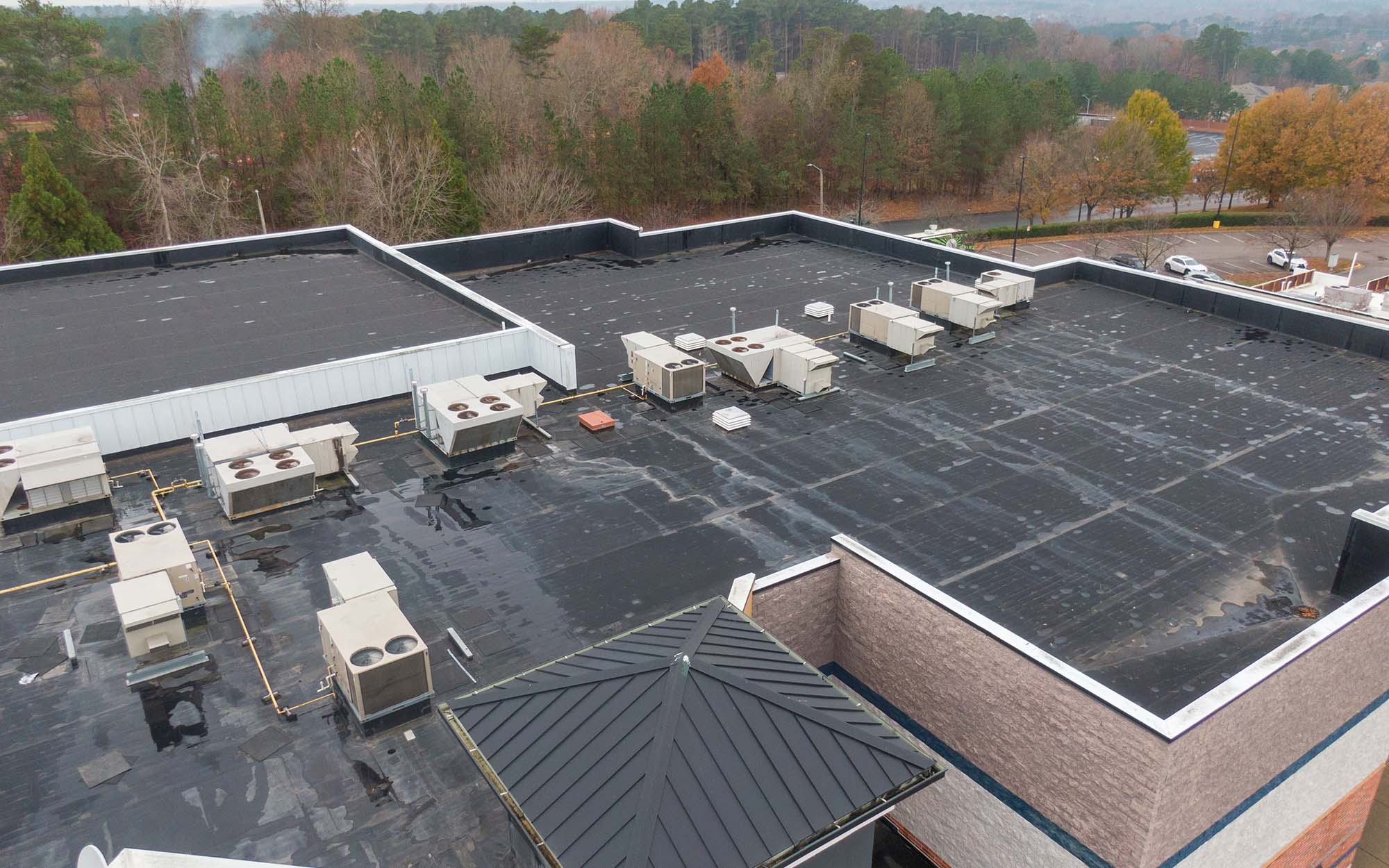
Water that sits on the roof for more than 48 hours after rain is a serious red flag. Ponding accelerates membrane breakdown, adds structural load, and often signals drainage or slope problems that need attention.
Visible Membrane Damage
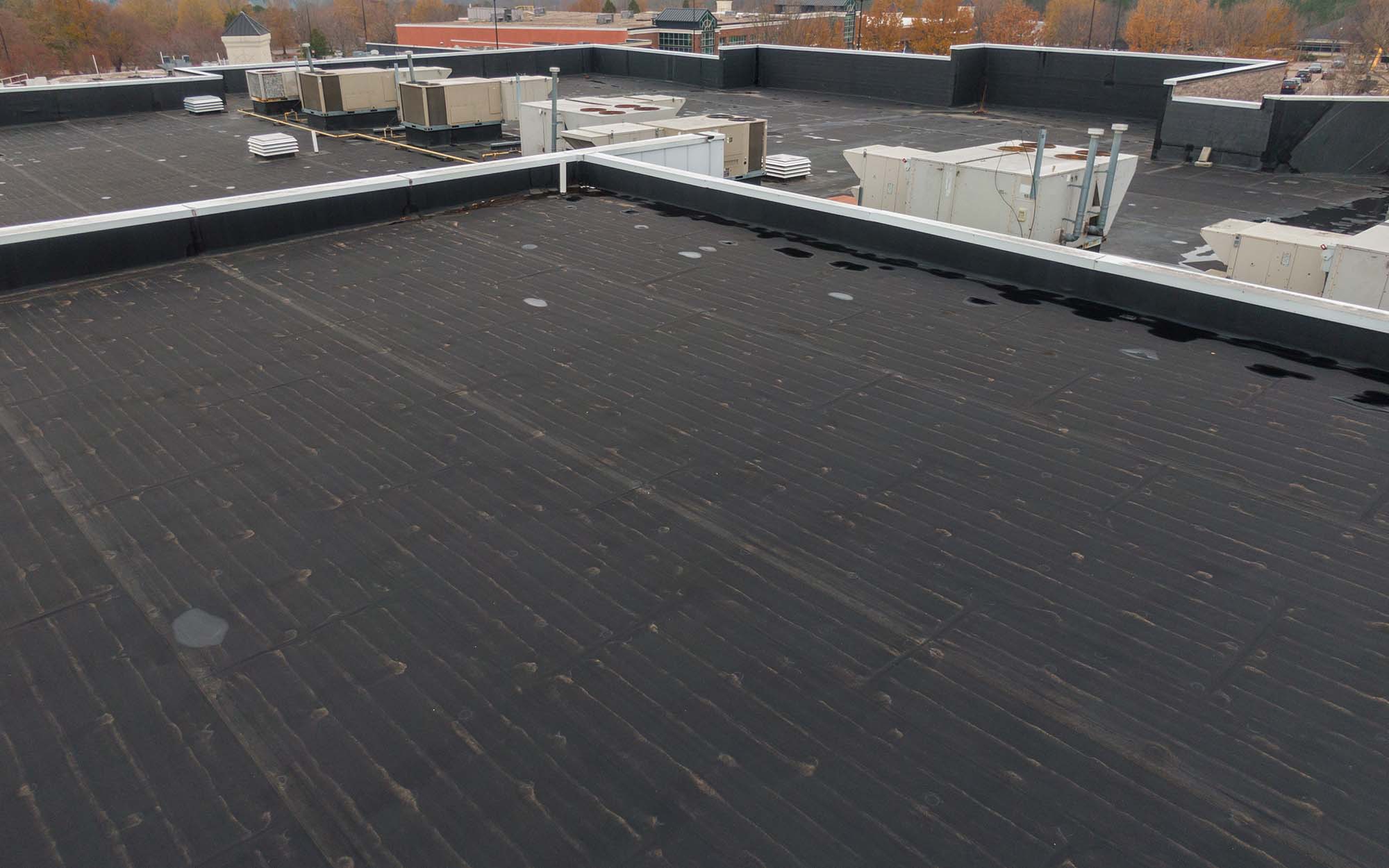
Tears, blisters, bubbles, or areas where the membrane has pulled away from edges or seams should never be ignored. Even small damage can let water in fast.
Loose Flashing or Seams
Flashing that’s lifted, cracked, or separating from the substrate is a leak waiting to happen. Same with seams that show visible gaps or adhesive failure.
Seasonal Inspection Strategy
Beyond the basic semi-annual schedule, a smart seasonal strategy keeps your roof a step ahead of the weather.
Spring Storm Recovery Inspections
Spring inspections focus on damage from winter. Snow load, ice dams, freeze-thaw cycles, and prolonged moisture all leave marks. This is the time to repair what winter broke and prepare the roof for the rainy season.
Fall Preventative Inspections Before Winter
Fall inspections prepare the roof for harsh weather ahead. Drains get cleared, seams and flashing get checked, and any minor damage from summer heat gets addressed before snow piles up.
Mid-Summer Heat Stress Checks
In regions with intense summer heat, a quick mid-summer check helps catch UV damage, thermal expansion stress, and HVAC-related wear before it compounds. This is especially important for buildings with white or reflective roofing systems.
How Inspections Prevent Costly Repairs
Regular inspections pay for themselves several times over. Here’s how the math actually works in your favor.
Early Detection Benefits
A torn seam caught early costs a few hundred dollars to repair. The same tear ignored for six months can mean saturated insulation, interior water damage, and a full section replacement running into the tens of thousands.
Leak Prevention
Most commercial roof leaks don’t happen overnight. They develop over weeks or months as small issues grow. Inspections interrupt that progression before water ever reaches the inside of the building.
Moisture Intrusion Avoidance
Wet insulation is one of the most expensive problems a commercial roof can develop. It destroys energy efficiency, accelerates structural decay, and often requires complete replacement to fix. Regular inspections catch the conditions that lead to moisture intrusion long before insulation gets soaked.
Integration With Maintenance Planning
Inspections work best when they feed into a bigger budgeting and maintenance strategy. Standalone inspections are useful. Inspections plugged into a larger plan are transformative.
Annual Budgeting Alignment
Build inspection costs and likely repair findings into your annual operating budget. When you can predict roughly what your roof will need, you stop reacting to surprise expenses.
Capital Planning Cycles
Inspection data, especially remaining lifespan estimates, feeds directly into capital planning. Knowing when a full replacement is coming lets you start setting aside funds years in advance.
Maintenance Scheduling Systems
Tie inspections into whatever CMMS or maintenance scheduling system you already use. When inspections, repairs, and routine maintenance live in the same calendar, nothing falls through the cracks.
Lock In Your Inspection Schedule With The Superior Group
How often should you inspect your commercial roof? Twice a year as a baseline, more often based on age, climate, and use, and always after a serious storm. That’s the rhythm that protects your building, your budget, and your sanity. A consistent commercial roof inspection schedule turns your roof from a source of uncertainty into a predictable, well-managed asset. Pair that schedule with a trusted roofing partner who delivers detailed reports and honest recommendations, and you’ve eliminated one of the biggest variables in commercial property management.
Stop hoping your roof is fine and start knowing it is. Reach out to The Superior Group now to schedule your free commercial roof inspection and build a maintenance plan that keeps your building protected for years to come.