Your roof is doing a lot of quiet, thankless work up there. It shields your inventory, your equipment, your tenants, and your bottom line from everything Mother Nature can throw at it. And yet, most facility managers only think about the roof when something goes wrong, usually right after a storm or when a ceiling tile starts dripping.
That reactive approach is what turns small problems into six-figure headaches. The good news? A solid commercial roofing inspection checklist puts you back in control. Whether you manage one building or a portfolio of properties, this guide walks you through everything you need to know to evaluate, maintain, and extend the life of your commercial roof.
Understanding the Purpose of Commercial Roof Inspections
Before we jump into the what and when, let’s talk about the why. Commercial roof inspections exist for one core reason: to catch problems while they’re still affordable to fix. A torn seam caught in spring costs a few hundred dollars to repair. The same tear ignored for six months can mean saturated insulation, interior water damage, and a full tear-off replacement.
Preventative Maintenance Goals
The goal of any commercial roofing inspection checklist is to identify wear, weather damage, and weak points before they become emergencies. Routine inspections give you a baseline, so you can spot changes between visits and act early.
Asset Protection
Your roof is a major capital asset. Protecting it means protecting everything underneath it. That includes tenants, machinery, inventory, and operational continuity. A leak in the wrong spot can shut down a production line, ruin merchandise, or trigger a tenant lawsuit.
Lifecycle Management
Every commercial roof has an expected lifespan, and how you treat it determines whether you hit the high end of that range or fall short. Lifecycle management means tracking the roof’s condition over time and making informed decisions about when to repair, restore , or replace.
How Often Commercial Roofs Should Be Inspected
There’s no one-size-fits-all answer, but there are clear best practices for keeping inspections on a smart schedule.
Seasonal Recommendations
At a minimum, schedule commercial roof inspections twice a year, once in spring and once in fall. Spring inspections catch damage from winter snow, ice dams, and freeze-thaw cycles. Fall inspections prepare your roof for the harsh months ahead by addressing summer UV wear and clearing debris.
Post-Storm Inspections
After any significant weather event, including hail, high winds, or heavy snow loads, an additional inspection is essential. Storm damage often hides in plain sight, and waiting until the next scheduled visit gives small punctures and lifted flashing time to do real harm.
Manufacturer Requirements
Many commercial roofing warranties require documented annual inspections. Skip them, and you could void the warranty entirely. Always check your warranty terms and align your inspection schedule accordingly.
Exterior Roof Components to Inspect
This is where your commercial roofing inspection checklist gets tactical. Every visit should cover these key exterior components from top to bottom.
Membranes
Walk the entire membrane surface looking for blisters, bubbles, tears, punctures, or areas where the material has shrunk or pulled away from the edges. Pay special attention to high-traffic zones and corners.
Flashing
Flashing seals the transitions between the roof and walls, parapets, chimneys, and other vertical elements. Look for cracks, rust, loose fasteners, or separation from the substrate. Flashing failures are one of the most common sources of leaks.
Seams
Inspect every seam for separation, lifting, or visible adhesive failure. Seams are stress points, and they’re often where membranes fail first.
Drains and Gutters
Clogged drains lead to ponding water, which is one of the fastest ways to destroy a flat roof. Clear out leaves, debris, and sediment. Check that all drains flow freely and that gutters are intact and properly pitched.
Penetrations
Every pipe, vent, and conduit that pokes through the roof is a potential leak point. Inspect the boots, sealants, and surrounding membrane for signs of wear or separation.
HVAC Curbs
The metal curbs that support rooftop HVAC units take a beating. Check for rust, deteriorated gaskets, and gaps between the curb and the unit itself.
Rooftop Equipment Areas
Anywhere foot traffic concentrates, like around HVAC units, satellite dishes, or solar panels, deserves extra attention. Look for crushed insulation, abraded membrane, and dropped tools or fasteners that could cause punctures.
Interior Signs of Roofing Problems
Sometimes the best clues about your roof are found inside the building. Train your team to spot these warning signs during routine walkthroughs.
Water Stains
Brown or yellow rings on ceiling tiles are the classic giveaway. Even if a stain looks old, treat it as active until proven otherwise.
Mold Growth
Visible mold, especially near walls and ceilings, points to moisture intrusion. Mold is also a health and liability concern, so address it quickly.
Ceiling Discoloration
Subtle color changes, sagging tiles, or bulging drywall all signal trapped moisture above. Don’t wait for the drip to confirm what you already suspect.
Insulation Issues
Wet insulation loses R-value, drives up energy costs, and accelerates structural damage. If utility bills spike without explanation, your insulation may be holding water.
Common Problems Found During Commercial Roof Inspections
Knowing what to look for makes inspections more efficient and more useful. These are the issues that show up again and again on commercial properties.
Ponding Water
Water that sits on the roof more than 48 hours after rainfall accelerates membrane breakdown and adds load to the structure.
Membrane Punctures
Small holes from dropped tools, foot traffic, or impact damage can leak silently for months.
Blistering
Trapped moisture or air under the membrane creates raised bubbles that eventually rupture.
Shrinkage
Some membrane materials shrink over time, pulling away from edges, seams, and penetrations.
Drainage Blockages
Clogged scuppers, internal drains, and gutters cause water to back up where it shouldn’t.
UV Deterioration
Sun exposure dries out, cracks, and weakens roofing materials, especially on south-facing slopes.
Every day you wait is another day small problems can quietly become big ones. The Superior Group offers free, no-pressure commercial roof inspection services using advanced drone and infrared technology to give you a complete picture of your roof’s condition.
Preventative Maintenance Best Practices
Inspections tell you what’s wrong. Preventative maintenance keeps things from going wrong in the first place.
Scheduled Inspections
Put inspections on the calendar and treat them as non-negotiable. Consistency is what separates a well-maintained roof from a problem property.
Cleaning Drains
Clear drains and gutters at least twice a year, and after any heavy storm. This is one of the simplest and most impactful maintenance tasks you can do.
Limiting Rooftop Traffic
Every foot on the roof is a chance for damage. Restrict access, install walk pads in high-traffic areas, and require that contractors check in before going up.
Documentation Tracking
Keep a maintenance log with photos, dates, findings, and actions taken. Good documentation supports warranty claims, insurance disputes, and capital planning.
What a Professional Roofing Inspection Report Should Include
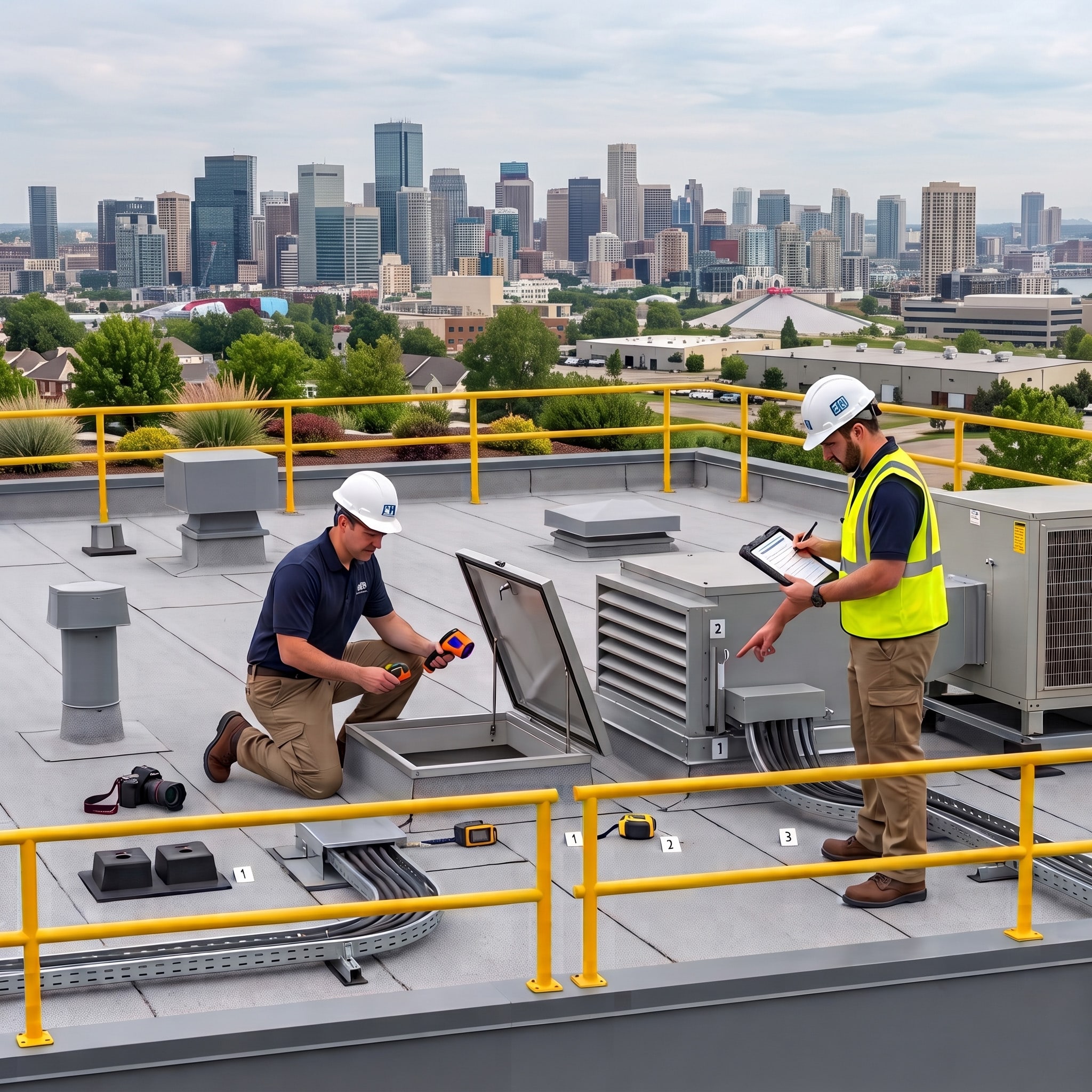
Anyone can walk on a roof. A professional commercial roof inspection delivers a documented, actionable report you can use to make real decisions.
-
Photos: Clear, labeled photos of every issue identified, plus context shots of the overall roof condition.
-
Moisture Findings: Infrared or moisture scan results showing where water has penetrated the system, even if there’s no visible leak yet.
-
Repair Recommendations: Prioritized recommendations with rough cost ranges, so you can plan what needs immediate attention versus what can wait.
-
Remaining Roof Lifespan Estimates: A realistic assessment of how many years the roof has left under current conditions, which feeds directly into your capital planning.
Creating a Long-Term Roofing Maintenance Plan
A commercial roofing inspection checklist works best when it’s part of a bigger plan.
Annual Budgeting
Build a line item for roof maintenance into your annual operating budget. Predictable spending beats emergency repairs every time.
Inspection Schedules
Lock in your spring and fall inspections, plus any required warranty visits, at the start of each year.
Maintenance Logs
Keep detailed records of every inspection, repair, and observation. Over time, this log becomes one of your most valuable property documents.
Capital Planning
Use inspection data to forecast when major repairs or replacement will be needed, and start setting aside funds well in advance.
Book Your Free Commercial Roof Inspection With The Superior Group
Your roof works hard for your business every single day. Treating it with the same intentional, proactive care you give the rest of your facility pays off in lower repair costs, longer system life, and fewer surprises. A reliable commercial roofing inspection checklist is the foundation, but the real value comes from consistent execution, smart documentation, and partnering with experienced professionals who know what to look for. With the right approach, your roof becomes one of your most predictable, protected assets.
Don’t wait for a leak to make the decision for you. Contact The Superior Group now for a professional commercial roof inspection and get the clarity, documentation, and peace of mind your facility deserves.